State R&D Tax Credits: What You Need to Know
Like many U.S. tax incentive programs, the research and development tax credit has both a federal and local component to optimize cash flow opportunities to business owners in a wide range of industries. However, like many U.S. tax benefit initiatives, the R&D tax credit terrain is constantly changing on both a federal and local level, making it challenging for taxpayers throughout the U.S. to designate eligibility of their existing operational expenses. As a result, business owners of every size and scope often miss out on potentially significant returns simply because they aren't aware that their company meets the designated federal and/or state standards.
Understanding General State-by-State Distinctions
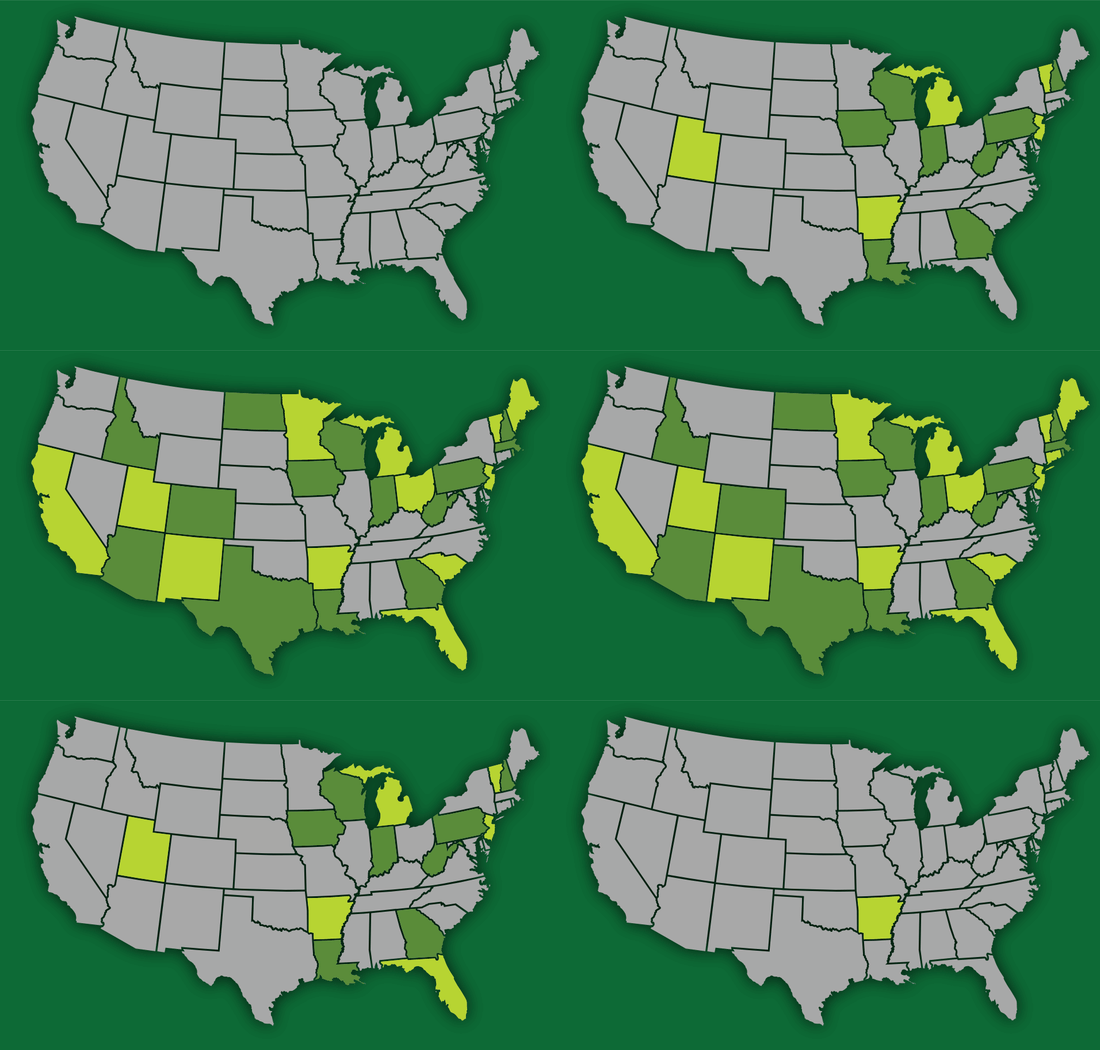
Currently, 35 U.S. states offer the R&D tax credit to entrepreneurs as a means to drive business profits, stimulate regional economy, and drive job creation within its borders. While many local innovation tax credit programs do adhere to federal and IRS direction regarding Qualified Research Expenditures (QREs) and other claim designations, some states have mandated specific exceptions. Recognizing and understanding some of the most common distinctions can help you determine your company's eligibility.
When Identifying Specific State Qualifications, it's Important to Consider:
Eligible Entities
Most participating states recognize C-Corporations, S-Corporations, LLCs, and Partnerships as qualifying innovation tax credit entities. However, some states like Florida, Rhode Island, and Connecticut only allow C-Corporations to qualify for the benefit. Additionally, Massachusetts allows both C-Corporations and S-Corporations to file for deductions.
Deadline for Filing
As a general rule, many local laws require taxpayers to file for the R&D tax credit when filing their state tax return. However, other states, including Virginia, Pennsylvania, New Hampshire, Florida, Maryland, Arkansas, and Delaware allow different filing deadlines.
R&D Tax Credit Percentages
Every state offers specific R&D tax credit percentages based on QREs and a multitude of other factors.
Carryforward Credit
Some states recognize carryforward credits, while others (like Kansas) do not. The carryforward credit for participating states varies; some local legislation allows for an indefinite carryforward timespan; however, other laws designate a range that includes 3, 5, 7, 9, 10, 15, and even 20 years. Additionally, there are states that may also allow (or disallow) credits to be carried back.
Every State Outlines Specific Local R&D Tax Credit Regulations
Beyond general distinctions like filing deadlines and entity eligibility, every participating state has its own designated regulations that outline a litany of key criteria such as the application process, calculation method, and a multitude of other essential requirements for qualifying taxpayers. For example, Utah uses two methods to calculate its R&D tax credit base amount: Regular Credit (RC) and Alternative Simplified Credit (ASC) method. However, Minnesota does not conform to the federal alternative simplified method.
Partner With an R&D Tax Credit Expert to Optimize Benefit Value
With so many varying and changing rules from state-to-state, navigating through the local and federal R&D tax credit legislation can prove a full-time (and often frustrating) job. We can help. Acena Consulting's state-by-state research tax credit outline breaks down some of the biggest local requirements and distinctions to help minimize taxpayer burden.
While our state-by-state resource offers invaluable information, the best way to ensure you or your clients don't overlook cash-infusing credit opportunities is to partner with a tax services expert in the R&D tax credit vertical. Contact Acena Consulting today to hear more.